Entendiendo la temporada de kitesurf en Isla Blanca
La temporada principal de kitesurf en Isla Blanca se extiende normalmente de noviembre a abril..
Durante estos meses, los frentes fríos que se desplazan por el golfo de México se combinan con los patrones de viento regionales para crear las condiciones más confiables del año.
Este periodo generalmente ofrece:
- Viento constante
- Temperaturas agradables
- Agua cálida
- Días soleados
- Excelentes condiciones de aprendizaje
No es casualidad que los riders de Norteamérica y Europa elijan esta época del año para escapar del invierno y disfrutar de algunas de las mejores condiciones de kitesurf en México.
Noviembre: Comienza la temporada
Noviembre marca el regreso del viento constante tras los meses más tranquilos del año.
A medida que los sistemas meteorológicos comienzan a cambiar, los riders pueden esperar condiciones cada vez más constantes y una menor afluencia de personas en comparación con la temporada alta.
Es un mes excelente para los viajeros que disfrutan de un ambiente más relajado, mientras siguen aprovechando condiciones de navegación de gran calidad.
Diciembre: Viento, sol y escapadas caribeñas
Diciembre trae consigo agua más cálida, un clima hermoso y un viento cada vez más confiable.
Para muchos visitantes, es el momento perfecto para cambiar los abrigos de invierno por los board shorts y experimentar el Caribe de una manera completamente diferente.
La combinación de viajes de vacaciones, temperaturas tropicales y una consistencia de viento cada vez mayor hace de diciembre uno de los meses más disfrutables para visitarnos.
Enero: Condiciones óptimas de kitesurf
Enero es considerado a menudo uno de los meses más fuertes de la temporada.
Los frentes fríos frecuentes ayudan a generar un viento constante, creando condiciones ideales tanto para progresar como para disfrutar de largas sesiones de navegación.
Ya sea que estés tomando clases o perfeccionando habilidades avanzadas, enero rara vez decepciona.
Febrero: La temporada alta en su máximo esplendor
Muchos riders consideran que febrero es el punto ideal del año.
Las condiciones de viento suelen ser muy confiables, las temperaturas se mantienen agradables y el agua es irresistible.
Para los principiantes, la constancia del viento puede acelerar el aprendizaje. Para los riders experimentados, es la oportunidad perfecta para maximizar el tiempo en el agua.
Si estás planeando un viaje dedicado exclusivamente al kitesurf, febrero debería estar en los primeros lugares de tu lista.
Marzo: El favorito de los principiantes
Marzo continúa ofreciendo excelentes condiciones, a la vez que brinda un equilibrio perfecto entre viento, sol y comodidad.
Muchos alumnos encuentran este mes ideal para aprender, ya que las sesiones suelen ser tanto productivas como sumamente disfrutables.
El clima cálido y las condiciones de agua plana hacen que progresar se sienta natural y gratificante.
Abril: Viento confiable y clima tropical
Para abril, el Caribe comienza a sentirse aún más tropical.
Los días se vuelven más largos, el agua se calienta más y el viento suele mantenerse confiable.
Esta combinación convierte a abril en uno de los meses más disfrutables para los viajeros que buscan aventura y relajación a partes iguales.
Mayo: El mes de transición
Mayo marca la transición gradual hacia el verano.
Aún se presentan días de buen viento con regularidad, pero las condiciones se vuelven un poco menos predecibles que durante la temporada principal.
For travelers looking for fewer visitors and a more laid-back experience, May can still offer excellent opportunities to ride.
De junio a agosto: Verano en el paraíso
El verano trae consigo temperaturas cálidas, aguas turquesas y un ambiente relajado.
Aunque las condiciones del viento pueden ser más variables que durante el invierno y la primavera, todavía hay días de navegación muy disfrutables a lo largo de la temporada.
Para los viajeros que desean combinar el kitesurf con la exploración de Cancún, los cenotes, las ruinas mayas y la Riviera Maya, el verano sigue siendo una opción muy atractiva.
Septiembre y octubre: La naturaleza toma el control
Generalmente, estos meses se consideran los más impredecibles para los deportes de viento en la región.
Las condiciones pueden variar significativamente de una semana a otra, lo que hace más difícil planificar un viaje dedicado exclusivamente al kitesurf basándose solo en el viento.
Sin embargo, la belleza natural de Isla Blanca sigue siendo igual de impresionante, ofreciendo playas tranquilas, vida silvestre,
¿Cuándo es el mejor momento absoluto para visitarnos?
Si tu objetivo principal es el kitesurf, los meses de enero, febrero y marzo generalmente se consideran los más confiables.
Durante este periodo, Isla Blanca suele disfrutar de:
- Frentes fríos frecuentes que generan viento.
- Condiciones de navegación constantes.
- Temperaturas agradables
- Aguas cálidas del Caribe.
- Zonas de agua llana ideales para progresar.
Para muchos navegantes e instructores, este es el corazón de la temporada.
Los mejores meses para principiantes
Si estás aprendiendo a hacer kitesurf por primera vez, los meses más recomendables para principiantes suelen ser:
- Noviembre
- Diciembre
- Febrero
- Marzo
- Abril
Estos meses suelen ofrecer la combinación ideal de:
- Viento constante
- Un clima agradable.
- Agua cálida
- Condiciones predecibles.
- Un progreso de aprendizaje más rápido.
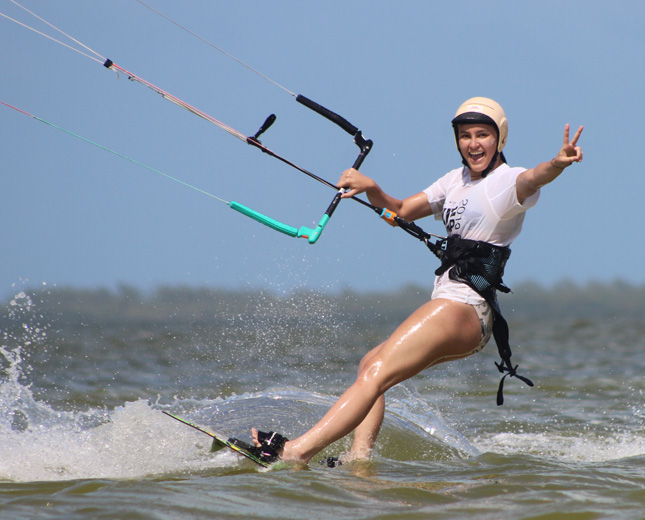
Con instrucción profesional y condiciones favorables, muchos alumnos logran un progreso notable en solo unos pocos días.
Más que un destino de kitesurf
Lo que hace que Isla Blanca sea realmente especial no es solo el viento.
Es esa sensación de aventura que acompaña a cada visita.
Entre sesiones, puedes disfrutar de:
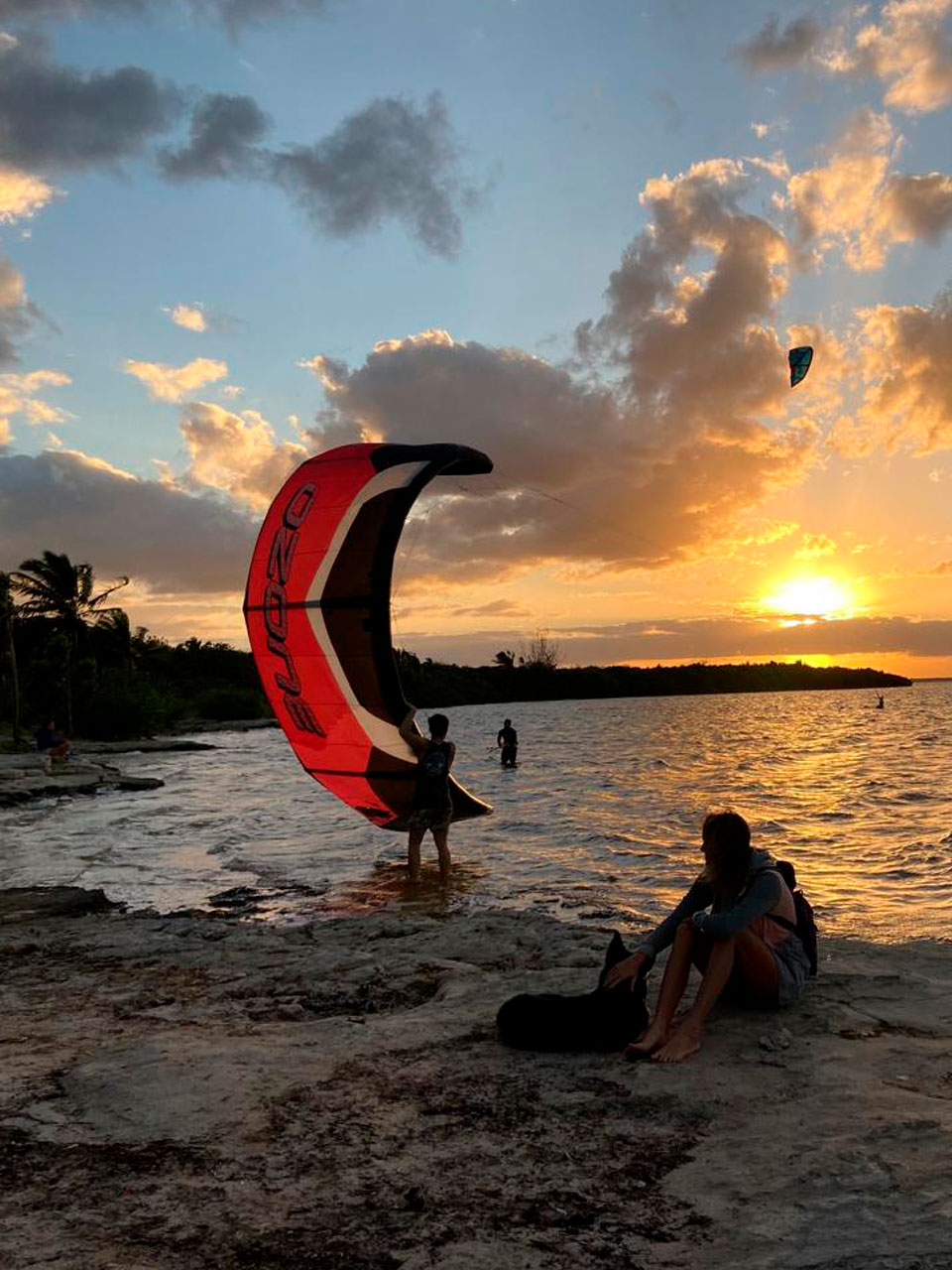
- Atardeceres espectaculares
- Avistamiento de aves y vida silvestre.
- Playas vírgenes.
- Experiencias gastronómicas locales.
- Paddleboard y kayak.
- Explorar la belleza natural de la península de Yucatán.
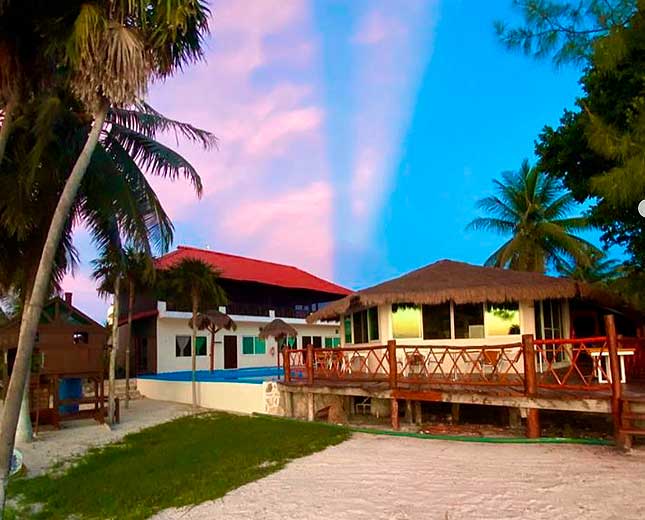
El resultado es más que un viaje deportivo: es una oportunidad para reconectar con la naturaleza, ponerte a prueba y experimentar el Caribe desde una perspectiva completamente diferente.
🌍 Conclusión
Entonces, ¿cuál es la mejor época para hacer kitesurf en Cancún e Isla Blanca?
Para disfrutar del viento más constante, planea tu viaje entre noviembre y abril, siendo enero, febrero y marzo los meses más confiables del año.
Pero sin importar cuándo la visites, Isla Blanca ofrece algo que va más allá de las condiciones perfectas: una sensación de libertad, exploración y aventura que hace que los riders regresen temporada tras temporada.
Porque a veces, todo lo que se necesita es un poco de viento y un horizonte abierto para descubrir tu próxima gran aventura.
¿Listo para vivir la experiencia del kitesurf en Isla Blanca? Ya sea que vayas a tomar tu primera clase o estés buscando tu próxima escapada llena de viento, nunca ha habido un mejor momento para comenzar tu viaje.


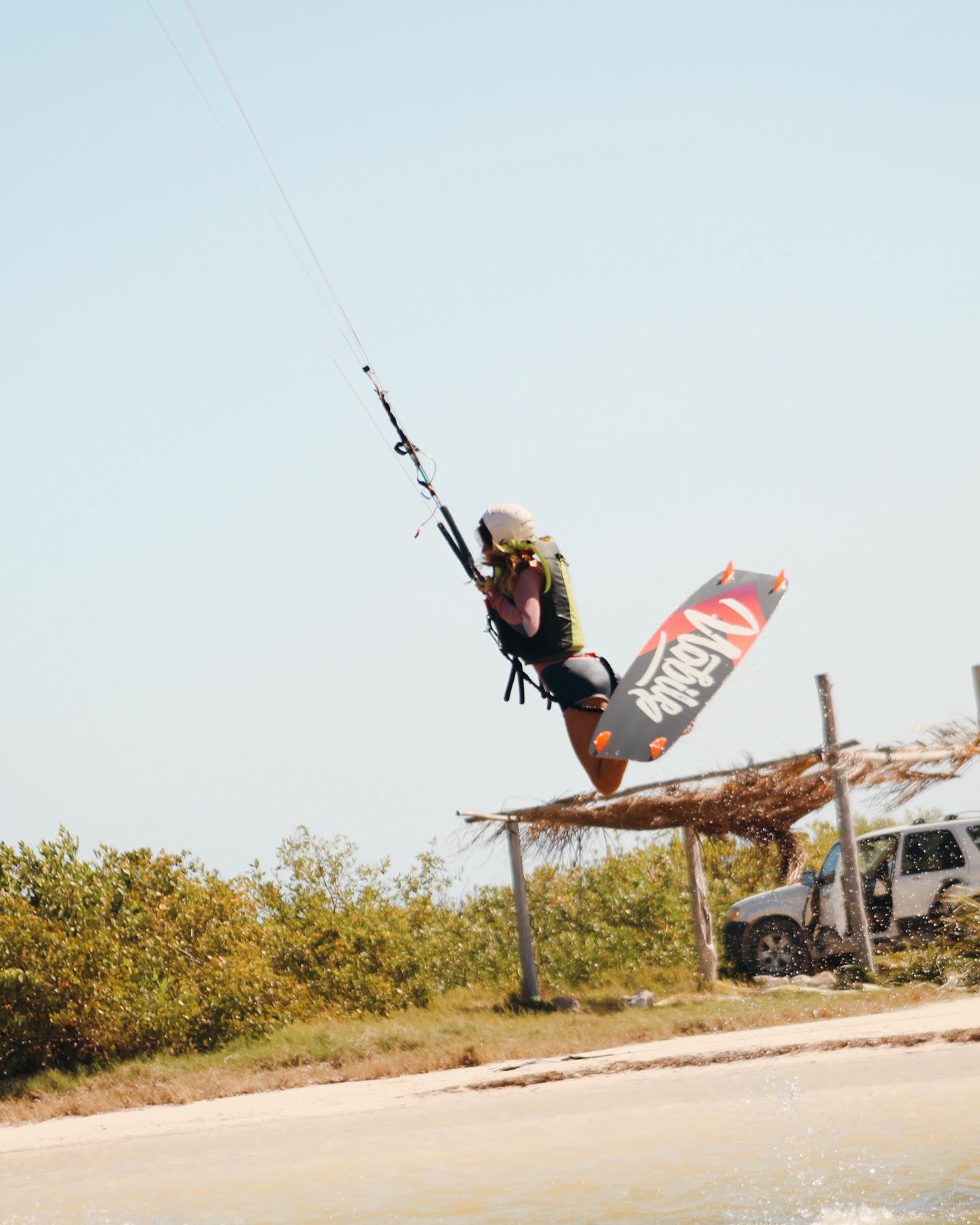
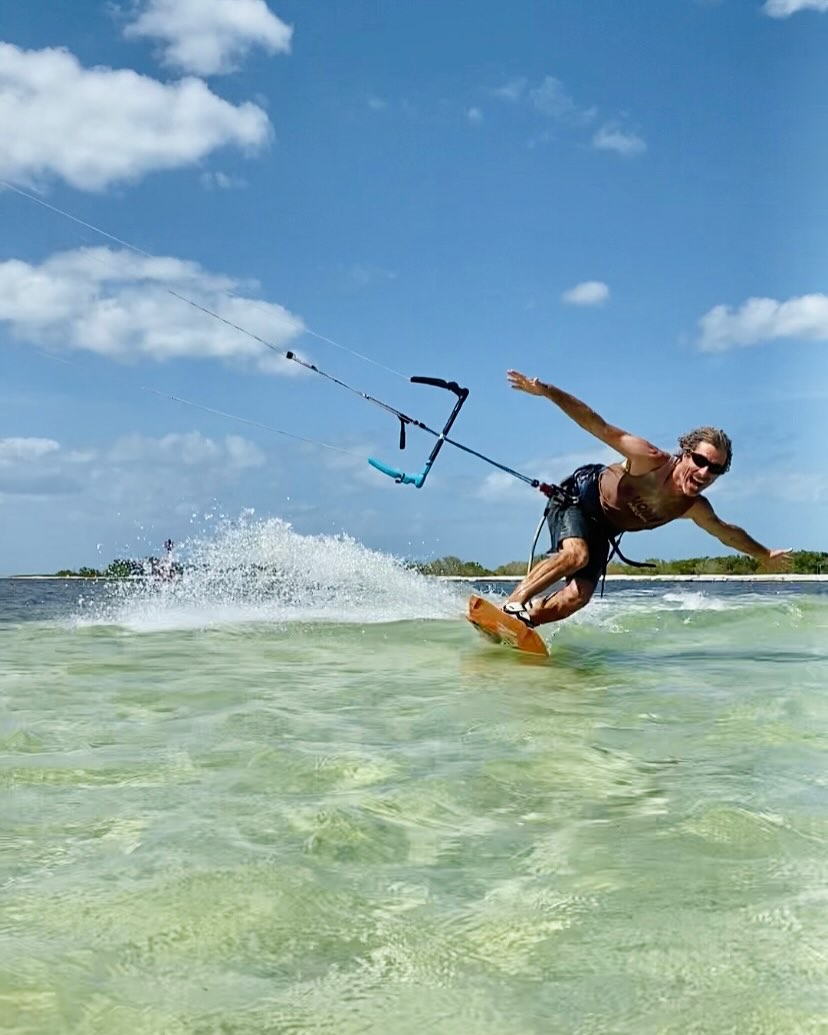

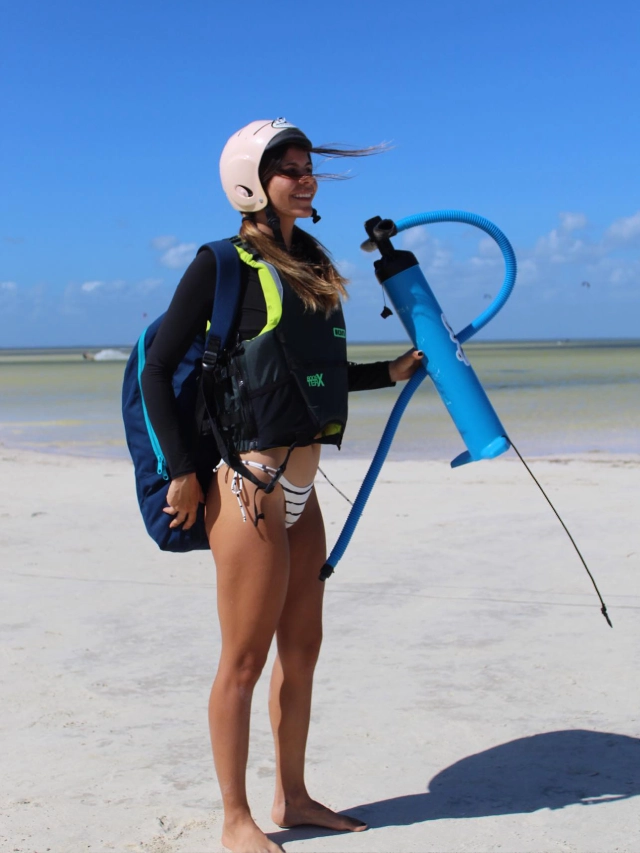


 Condiciones del viento en Isla Blanca (Resumen anual)
 Rango de viento típico:
 Dirección del viento:
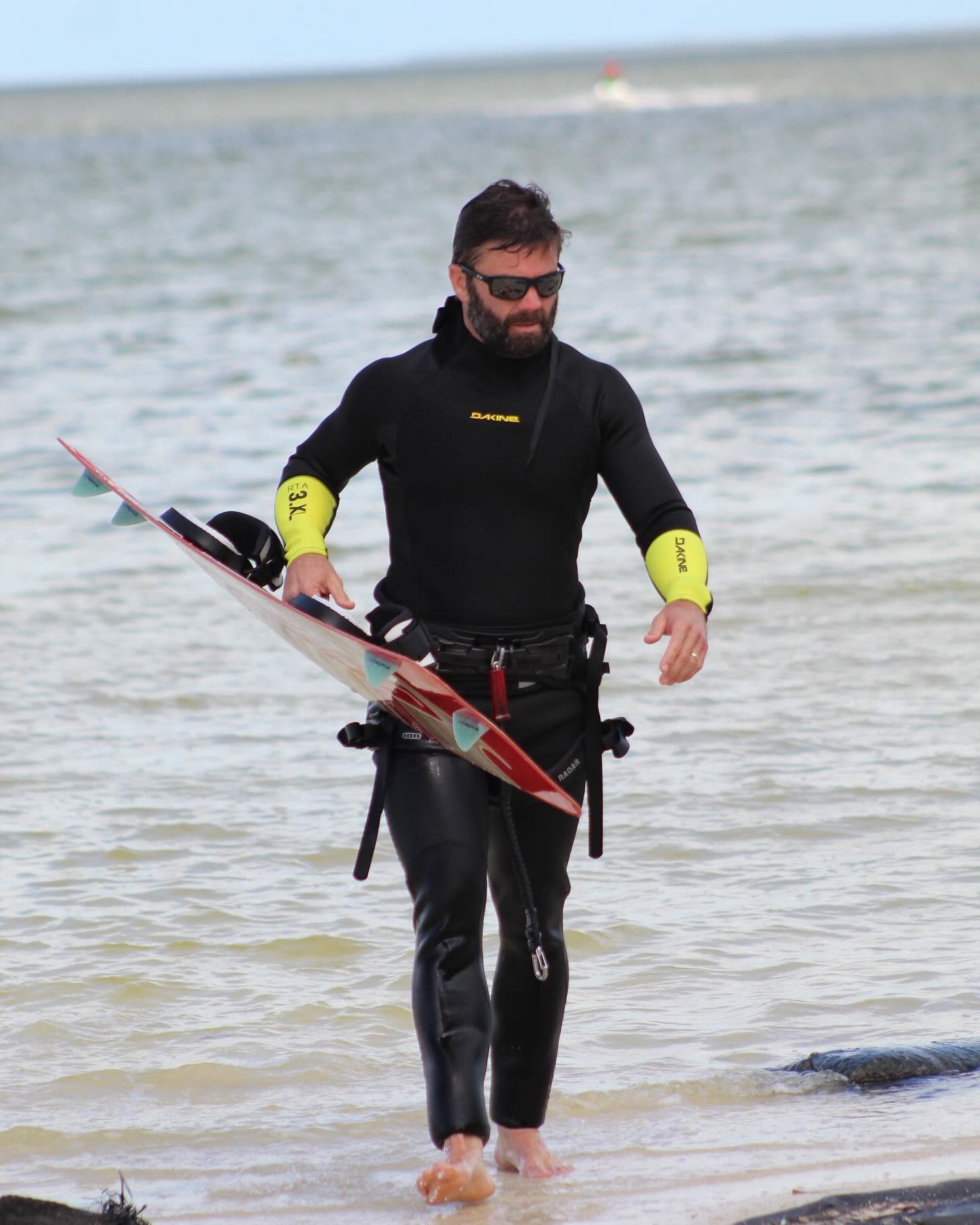
 Estas condiciones lo hacen ideal tanto para programas de learn kitesurf Mexico (aprender kitesurf en México) como para una progresión avanzada.


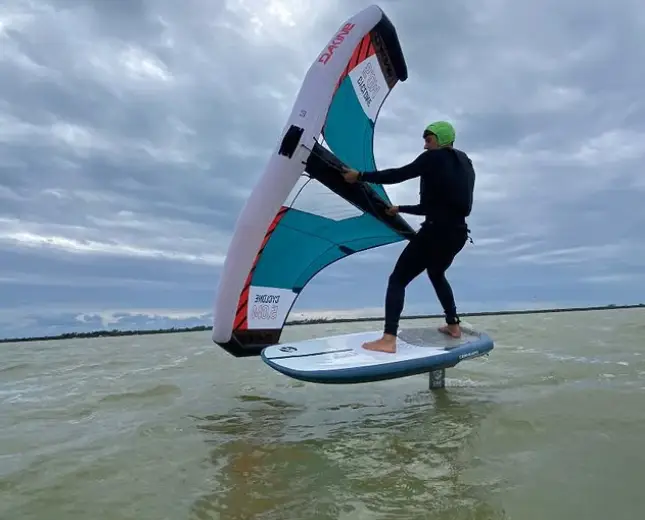


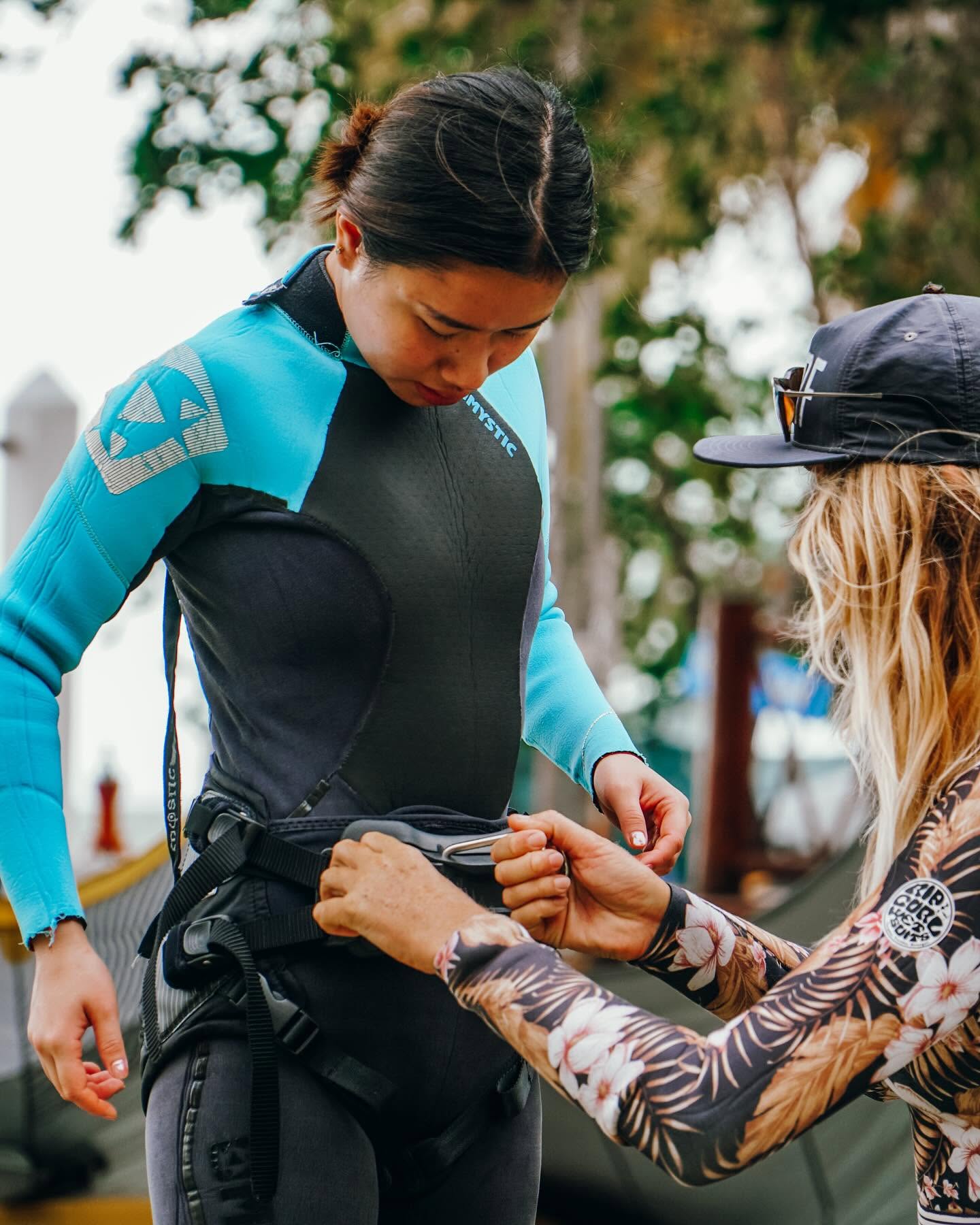
 Toma clases con instructores certificados.